

High Court Doubts Trump’s Power to Impose Global Tariffs
The U.S. Supreme Court recently heard arguments challenging the legality of President Donald Trump’s sweeping global tariffs, casting significant doubt on the extent of presidential authority in imposing such taxes. The case has massive implications for the global economy and is a major test of the balance of power between the executive and legislative branches of the U.S. government.
The Core Dispute: IEEPA and Congressional Power
The key focus of the legal challenge is Trump’s unprecedented use of the International Emergency Economic Powers Act (IEEPA) of 1977. This law allows a president to regulate commerce during a national emergency, and Trump invoked it to levy tariffs on nearly every U.S. trading partner, arguing that U.S. trade deficits constituted an “unusual and extraordinary threat.” The Challengers: Businesses affected by the tariffs and 12 U.S. states challenged the administration’s actions, arguing that Trump exceeded his authority. Lower courts had previously ruled in their favor. The Law’s Intent: Liberal Justice Ketanji Brown Jackson suggested that IEEPA was intended to limit, not expand, the president’s emergency powers. IEEPA historically has been used for sanctions or freezing assets, not for imposing broad tariffs.
Tariffs as a Tax: The “Core Power” of Congress
Chief Justice John Roberts, a conservative justice, emphasized that tariffs are essentially taxes on Americans, a power that the U.S. Constitution explicitly grants to Congress. “The imposition of taxes on Americans… has always been the core power of Congress.” – Chief Justice John Roberts
Roberts also suggested the court could apply its “major questions” doctrine. This principle demands that executive branch actions with vast economic and political significance—such as imposing tariffs that could generate trillions of dollars—must be clearly authorized by Congress. Roberts noted that the justification for the tariffs seemed a “misfit” for the authority claimed under IEEPA. The Role of Foreign Affairs and Executive Authority Despite the skepticism, some conservative justices stressed the inherent authority of presidents in dealing with foreign countries, a point the administration’s lawyer, U.S. Solicitor General D. John Sauer, strongly pushed.
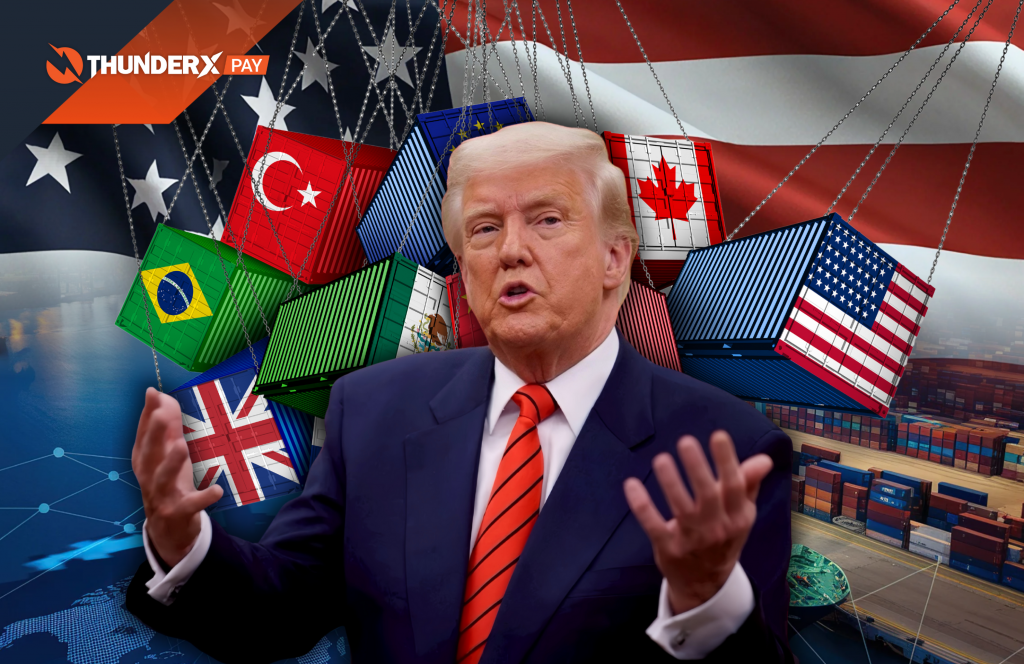
Foreign-Facing Tax: Roberts acknowledged that while tariffs are a tax, they are also a foreign-facing tax, and “foreign affairs is a core power of the executive.” He noted that the tariffs gave the president leverage in foreign trade negotiations.
Historical Precedent: Conservative Justice Brett Kavanaugh pointed to a precedent, noting that President Richard Nixon imposed a worldwide tariff under IEEPA’s predecessor statute, which had similar language. However, conservative Justice Neil Gorsuch raised concerns that giving the president such broad foreign affairs powers could threaten the Constitution’s separation of powers.
Economic Impact and Next Steps The IEEPA-based tariffs have been financially significant, generating an estimated $89 billion in collections between February 4 and September 23, according to U.S. Customs and Border Protection. U.S. Treasury Secretary Scott Bessent, who attended the arguments, indicated that if the Supreme Court rules against Trump, the administration would switch to other legal authorities to ensure the tariffs remain in place. The timing of the Supreme Court’s decision remains unclear, but its ruling will definitively shape the boundaries of presidential economic authority and could have major repercussions for U.S. trade policy and global markets.
Published on 11/11/2025
By Nicholas.