

The Greenland Gambit: Pricing the Economic Cost of Transatlantic Friction
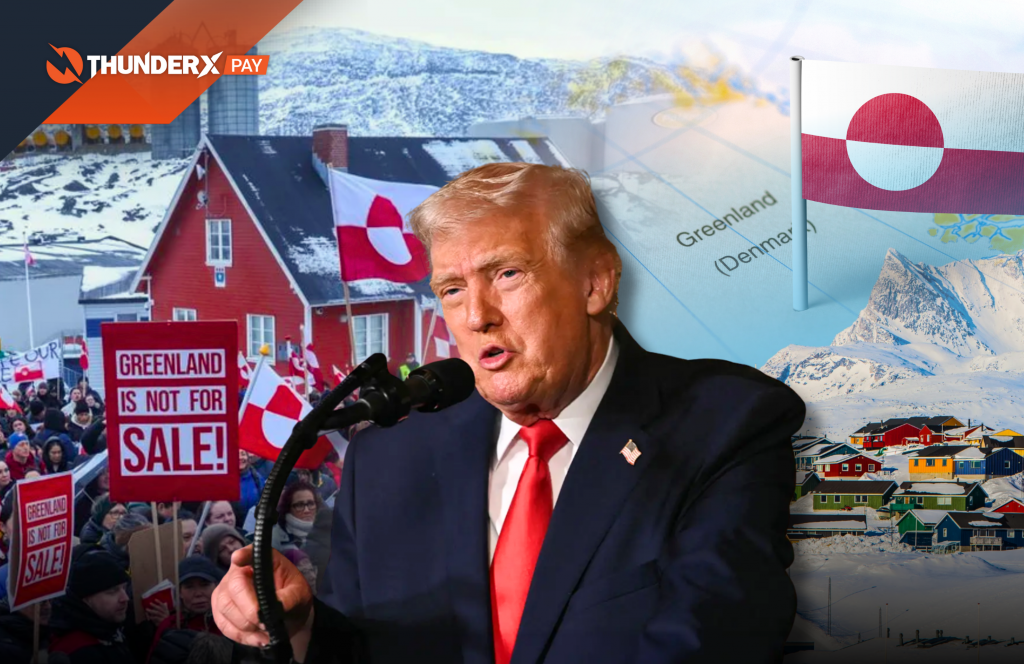
The prospect of a renewed push by the United States to acquire Greenland has transitioned
from a geopolitical curiosity into a tangible macroeconomic risk.
For global investors and financial institutions, this “Greenland Gambit” represents far more than a territorial dispute; it serves as a harbinger of structural shifts in trade stability and the erosion of the institutional frameworks that have underpinned Western markets for nearly eight decades.
As Washington’s negotiating style leans increasingly toward the confrontational and asymmetric, the primary concern for the capital markets is no longer just the outcome of the bid, but the volatility generated by the process itself.
The traditional model of consensus-driven diplomacy, long favored by the European Union, is facing an existential challenge. From an investment perspective, this shift is critical. Unpredictable diplomacy translates directly into market risk premiums, particularly when it threatens the core institutions that facilitate global trade and defense cooperation. While European leaders have historically relied on political rhetoric to maintain the status quo, the conversation in Brussels has pivoted toward “economic hard power.” The potential activation of the EU’s Anti-Coercion Instrument—often described as a “trade bazooka”—suggests that Europe is preparing to protect its sovereignty through regulatory pressure and market restrictions rather than mere diplomatic protest.
The stakes for the private sector are immense, given that the United States and the European Union maintain the world’s largest bilateral trade relationship. Any serious escalation over Greenland could rapidly devolve into a “Trade War 2.0,” characterized by retaliatory tariffs and disrupted supply chains. Such a scenario would likely compress profit margins for multinational corporations, push consumer prices higher at a time when central banks are struggling to anchor inflation, and weigh heavily on equity markets already sensitive to political shocks. French President Emmanuel Macron’s suggestion of restricting U.S. access to European markets reflects a growing consensus that economic leverage may be the only language Washington currently respects.
Beyond immediate trade concerns, the Greenland dispute poses a systemic threat to the stability of the North Atlantic Treaty Organization (NATO). For decades, the security guarantees provided by NATO have allowed European nations to focus on social and economic development while keeping defense spending predictable. A fractured alliance, triggered by disagreements over Arctic territory, would force a massive reallocation of capital. Sovereign debt markets would feel the strain as European governments are compelled to increase military expenditures, potentially at the expense of fiscal stability and long-term growth trajectories.
Furthermore, the financial fallout would not be contained to Europe. A trade confrontation would inevitably threaten American exporters and unsettle domestic stock markets—a metric frequently used by U.S. administrations to judge success. While Europe may lack the conventional military might of the United States, its control over the world’s most lucrative Single Market remains its most formidable weapon. Much like China’s strategic use of rare-earth exports to exert pressure, the EU is increasingly willing to weaponize its regulatory environment and trade flows to preserve its long-term interests, even at the cost of short-term economic pain.
Ultimately, the Greenland standoff serves as a stark reminder that the “security premium” of the past century is being repriced in real-time. Investors must now navigate a landscape where geopolitical unpredictability is a permanent fixture rather than a temporary anomaly. If economic confrontation becomes a matter of policy rather than posture, the global financial system may face a period of heightened fragmentation and weakened multilateral cooperation. In this environment, the ability to gauge the EU’s willingness to deploy its economic leverage will be a critical skill for any portfolio manager looking to survive the next era of transatlantic relations.
Published on 23 / 01 /2026
By. Nicholas